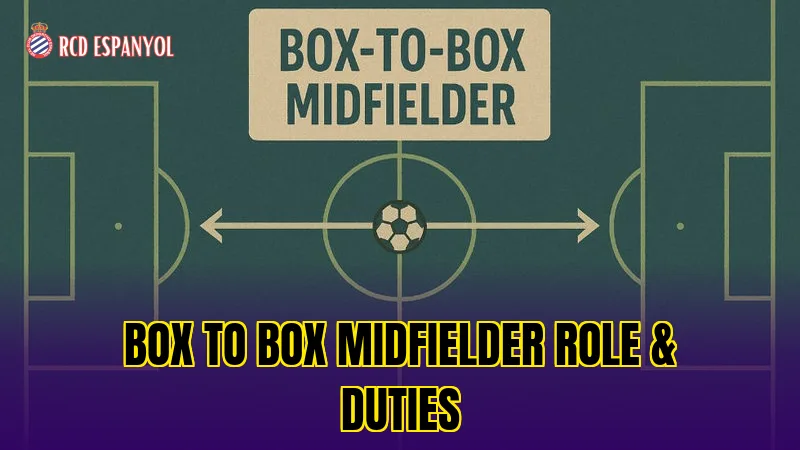
Box to box midfielder role has become one of the most valued positions in modern football, especially for ambitious clubs like RCD Espanyol aiming to dominate transitions in both halves of the pitch. This hybrid profile connects defence and attack, demands extreme stamina, and shapes how a team presses and counter‑attacks. Understanding the tactical and physical requirements behind this position helps coaches, analysts and bettors read matches more accurately and anticipate where games will be won or lost in the centre of the park.
Understanding the box to box midfielder role in modern football
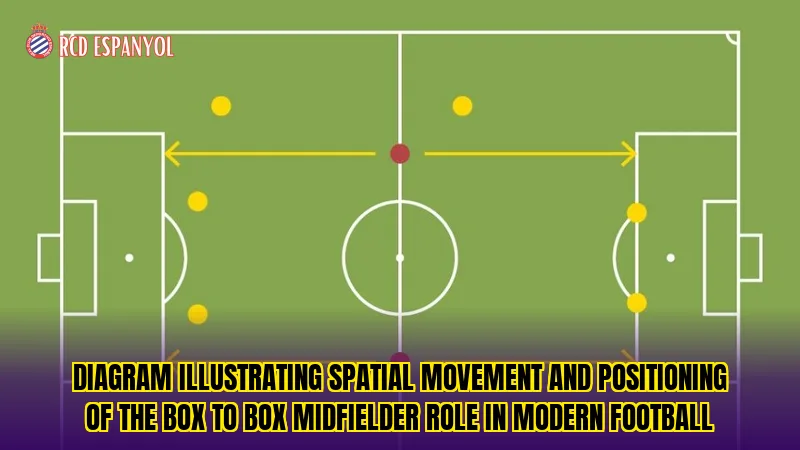
The evolution of tactics, from rigid 4‑4‑2 blocks to fluid positional play, has pushed the box to box midfielder role into the spotlight. No longer just a hard‑running workhorse, this player must read space, control tempo and support multiple phases. For analysts following clubs such as RCD Espanyol, recognising how this role functions explains why some teams look compact and dangerous in transition while others appear stretched and vulnerable between the lines.
Defensive responsibilities across both penalty areas
A key part of the box to box midfielder role is defensive coverage, especially when the team loses possession high up the pitch. The player must sprint back to protect the back four, track late runners and close passing lanes around the D of the box. When RCD Espanyol face opponents who overload central zones, this midfielder often drops alongside the holding player, forming a temporary double pivot that shields the centre‑backs and forces rivals to attack through less dangerous wide channels.
Attacking contribution and late runs into the box
On the ball, the box to box midfielder role provides vertical thrust, turning defensive recoveries into quick attacking moves. Intelligent late runs from deep are difficult to track, creating high‑value chances at the edge of the six‑yard area. For RCD Espanyol, a well‑timed surge beyond the striker can pin centre‑backs, free wingers to cut inside, and generate second‑ball opportunities around the penalty spot, all while maintaining enough structure to prevent exposure to counter‑attacks.
Linking play and controlling transitions
Perhaps the most subtle part of the box to box midfielder role is linking phases during chaotic transitions. After a turnover, this player decides whether to slow the tempo with safe passes or accelerate immediately with progressive carries. When RCD Espanyol regain possession, the first forward pass through midfield often goes to this profile, who can switch play to the weak side, combine with full‑backs, or drive centrally to commit defenders and open gaps for creative teammates arriving between the lines.
Core skills that define the box to box midfielder role
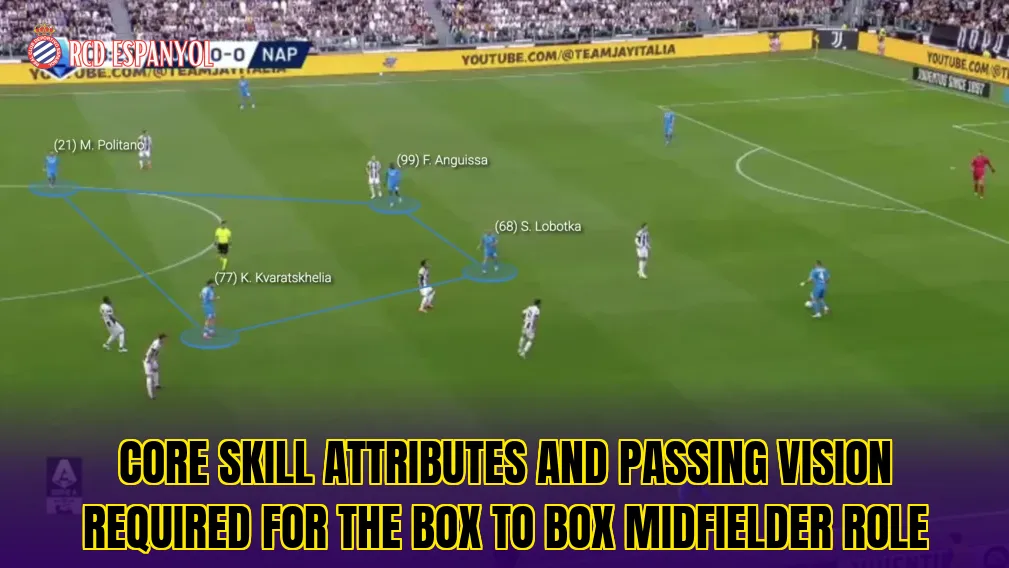
Because the box to box midfielder role spans such a large area, the technical and physical demands are uniquely high. Players must mix ball‑winning aggression with composure in tight spaces and the capacity to repeat high‑intensity sprints. Scouts assessing talent for clubs like RCD Espanyol increasingly look for hybrid attributes: pressing intelligence, passing range, and the resilience to maintain performance levels for the full ninety minutes plus stoppage time.
Physical demands: stamina, speed and duels
The engine behind the box to box midfielder role is elite endurance, allowing constant shuttling from one penalty area to the other. High aerobic capacity supports repeated sprints, while strength in duels helps win shoulder‑to‑shoulder battles in central corridors. This profile must also be explosive over short distances to close opponents quickly, intercept passes and recover into shape when the press is bypassed, preventing direct runs at the defensive line.
Technical qualities: first touch and passing variety
From a technical perspective, the box to box midfielder role requires a secure first touch under pressure, especially when receiving with back to goal. Short combination play in tight triangles helps the team escape pressing traps, while driven diagonal passes can immediately switch the point of attack. The ability to play disguised through balls or chipped passes into the channel adds unpredictability, turning simple recoveries into dangerous attacking sequences.
Tactical intelligence and spatial awareness
Tactical awareness separates an average runner from a truly elite performer in the box to box midfielder role. Constant scanning before receiving the ball allows quick decisions, such as when to recycle possession and when to punch a vertical pass through the lines. Off the ball, intelligent positioning between opposition midfielders cuts central passing lanes, supports the holding midfielder and ensures the team maintains compact distances between defence, midfield and attack.
| Key Attribute | Impact on Role | Match Indicators |
|---|---|---|
| Endurance | Supports constant box‑to‑box runs and pressing | High distance covered, late‑game intensity |
| Pressing IQ | Enables coordinated pressure and ball recovery | Interceptions, forced errors, turnovers |
| Passing range | Connects defence to attack in one or two actions | Progressive passes, switches of play |
| Timing of runs | Creates overloads and scoring chances from deep | Late box entries, shots from midfield |
How the box to box midfielder role shapes team tactics
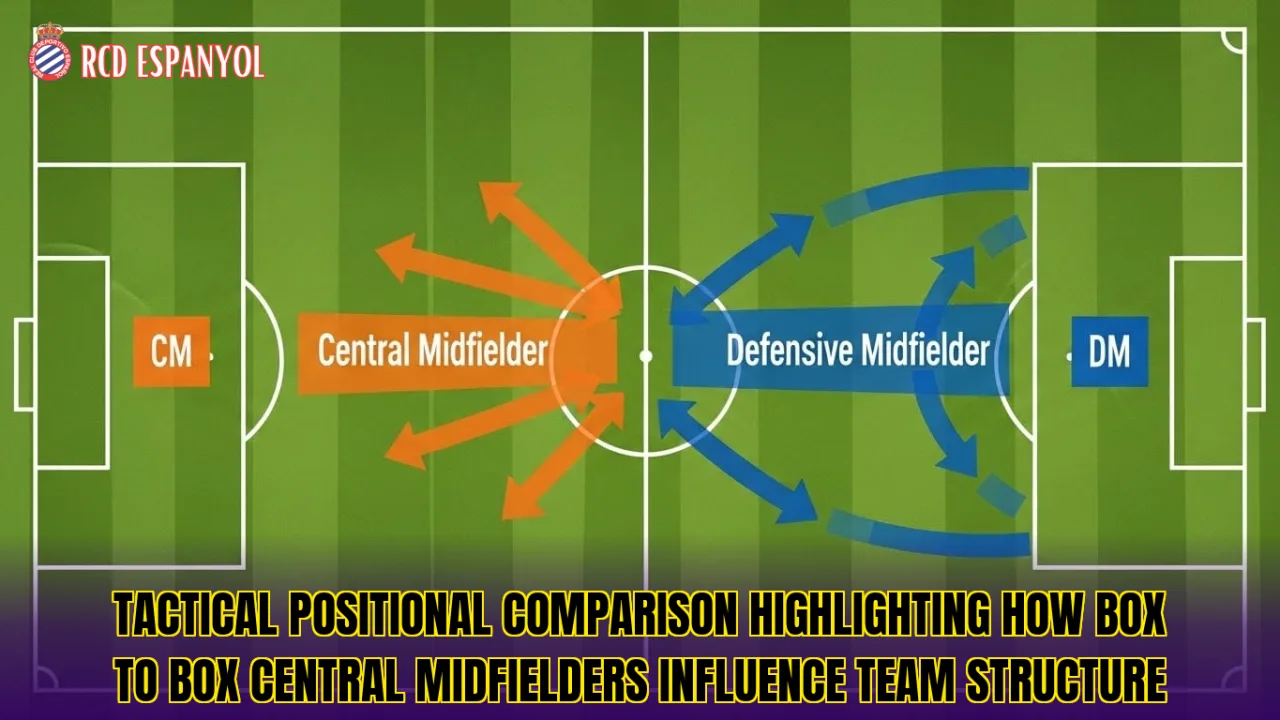
Coaches build entire game plans around the strengths of the box to box midfielder role, adjusting pressing heights, rest‑defence structure and counter‑attacking patterns. When a side possesses a dominant all‑action midfielder, they can commit more players forward knowing there is cover behind the ball. For analysts and bettors, recognising how this position influences tactical balance is crucial when evaluating match odds and predicting momentum swings.
Influence on pressing and counter‑pressing systems
In high‑pressing setups, the box to box midfielder role often triggers the first wave of pressure once the ball enters central zones. By jumping onto the opposition pivot, this player forces rushed passes wide or backwards, allowing teammates to squeeze up and compress space. Effective counter‑pressing after losing the ball relies on immediate reactions from this role, cutting off passing lanes and buying time for the defensive block to reset.
Supporting full‑backs and wide overloads
When full‑backs push high, the box to box midfielder role slides across to cover vacated channels, preventing dangerous counters down the flanks. This lateral movement also supports wide overloads, combining with wingers to create three‑man patterns near the touchline. By rotating positions intelligently, the midfielder can drag markers out of the centre, opening half‑spaces for creative teammates to receive facing goal and deliver decisive final balls.
Impact on set pieces and second balls
Set pieces are another area where the box to box midfielder role becomes decisive. On attacking corners, this player often waits on the edge of the box, ready to strike loose clearances or recycle possession. Defensively, quick reactions to second balls around the area prevent opponents from generating repeat shots. Strong aerial ability and anticipation help the team maintain territorial control after the initial delivery has been contested.
Training and developing players for the box to box midfielder role
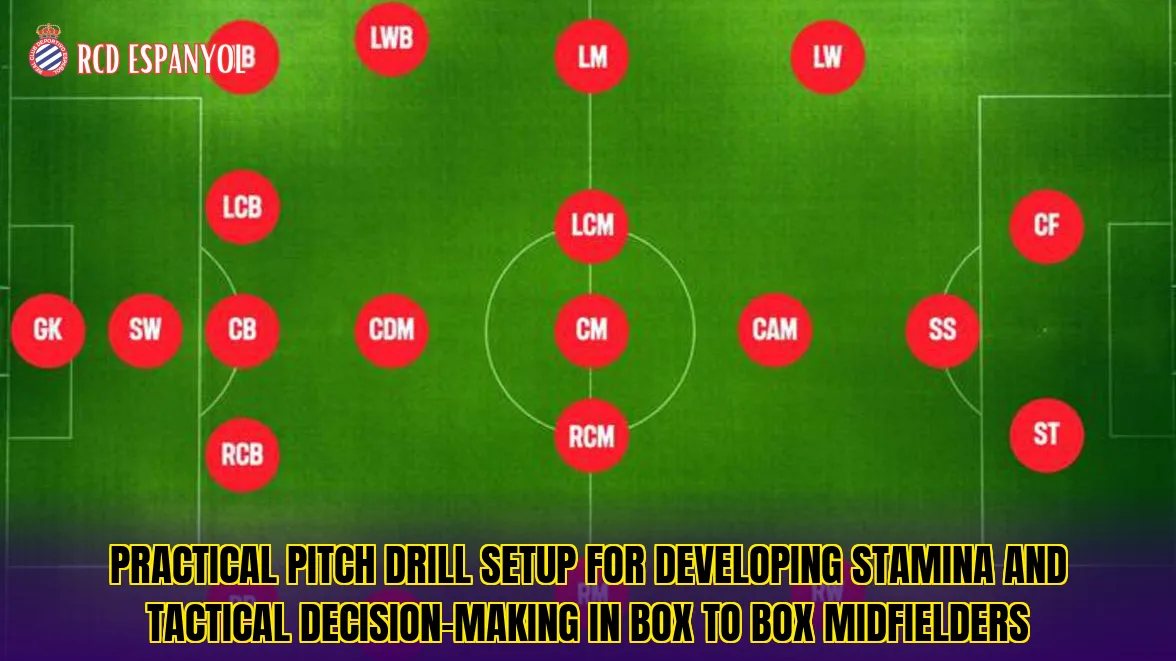
Preparing a youngster to thrive in the box to box midfielder role demands a holistic approach that combines conditioning, technical repetition and game‑specific tactical drills. Academies connected to clubs such as RCD Espanyol emphasise multi‑position training in youth categories so players understand defensive and attacking responsibilities. Over time, this broad education creates versatile midfielders capable of adapting to different systems and in‑game scenarios.
Conditioning and position‑specific fitness work
Fitness programmes for the box to box midfielder role focus on repeated high‑intensity efforts rather than simple long‑distance running. Interval training, small‑sided games and pressing drills simulate the constant accelerations of match play. Strength work in the gym targets core stability and lower‑body power, helping players win physical duels, protect the ball under contact and maintain balance when changing direction at speed in congested central zones.
Technical drills under pressure and fatigue
To mirror real match demands, coaches design exercises where the box to box midfielder role performs technical tasks while tired. Rondo variations, positional games and finishing drills from the edge of the area all take place after intense running blocks. This approach trains decision‑making under stress, improving first touch, passing accuracy and shooting when oxygen levels are low, a frequent reality late in both halves of competitive fixtures.
Tactical education through video and match analysis
Modern development of the box to box midfielder role also relies heavily on video analysis and data. Players review clips of their pressing angles, body orientation when receiving and timing of forward runs. Heat maps and pressing metrics highlight whether they are covering the right zones and supporting teammates effectively. By combining visual feedback with on‑pitch coaching, staff accelerate learning and help midfielders understand how small positional adjustments transform team balance.
Conclusion
The box to box midfielder role sits at the heart of modern football, linking defensive solidity with attacking dynamism through relentless movement, intelligent positioning and decisive actions in both penalty areas. Teams that master this profile gain control over transitions, impose their pressing style and create constant threat from deep runs and second‑ball dominance. For supporters, analysts and bettors following tactical trends, recognising how this role operates offers a clearer lens on why some sides manage games so effectively over ninety minutes. Clubs like RCD Espanyol increasingly rely on such complete midfielders to execute complex game models, adapt to different opponents and maintain intensity across congested fixture schedules. As the sport keeps evolving towards faster, more transitional play, understanding and developing this demanding position will remain a strategic priority for coaches and recruitment departments at every competitive level.
See also: The box-to-box midfielder role – an engaging topic for beginners to explore famous goal celebrations emotion-filled